
Phlebotomy Technique Training: How to Improve First-Attempt Blood Draw Success
Foundations for Better Outcomes in Phlebotomy Training
For patients, few clinical procedures are as routine, or as anxiety-inducing, as a blood draw. For healthcare organizations, first-attempt success isn’t just a metric; it’s a patient experience benchmark, a cost control measure, and a key quality indicator.
Yet despite how common venipuncture is, first-attempt failure rates remain as high as 25–30% among new practitioners, according to recent studies (Journal of Clinical Laboratory Science, 2024). These failures can lead to patient discomfort, specimen errors, and increased procedure time and cost.
The good news? With structured phlebotomy technique training and modern simulation tools, programs can improve first-attempt blood draw success dramatically, often in weeks, not years.
Why First-Attempt Success Matters
Improving first-stick success is more than a technical goal; it affects every part of the care pathway:
- Patient satisfaction: A single successful draw builds trust and reduces procedure-related anxiety.
- Clinical accuracy: Minimizing hemolysis and contamination means more reliable lab results.
- Operational efficiency: Fewer failed attempts free up staff time and reduce wasted supplies.
- Retention & confidence: Students who master venipuncture early report higher confidence entering clinical settings.
Hospitals and academic programs that prioritize venipuncture mastery early in training are setting the foundation for safer, more efficient patient care.
Common Causes of First-Attempt Failure
Understanding why first sticks fail is the first step toward solving the problem. Common factors include:
- Poor vein selection or palpation technique
- Incorrect needle angle or insertion depth
- Lack of familiarity with variable vein anatomy
- Inconsistent patient preparation and positioning
- Insufficient practice time before clinical rotations
Research from 2024 (Advances in Medical Education and Practice) found that early simulation-based venipuncture training reduced first-attempt failure rates by up to 36% compared to standard observation-based instruction.
Building Blocks for Venipuncture Mastery
- Structured, Progressive Training
Instead of focusing on one-time practice sessions, progressive skill-building, starting with basic hand positioning and advancing to more complex patient scenarios, builds lasting muscle memory and confidence. - Simulation That Mirrors Reality
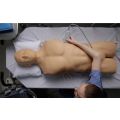
Using high-quality blood draw simulation equipment allows students to practice with realistic vein feel, puncture resistance, and variable anatomy. These tactile cues are critical to developing intuitive technique. - Emphasis on Vein Assessment and Site Selection
Consistent success depends on more than needle control. Proper palpation technique, vein mapping, and patient positioning can improve success rates by double digits, according to recent phlebotomy training outcomes (Nursing Education Perspectives, 2024). - Feedback-Driven Learning
Real-time feedback accelerates correction and skill acquisition. - Repetition Without Risk
Simulation allows for unlimited practice in a no-risk environment, ensuring students can refine their technique long before patient contact.
The Role of Simulation in First-Stick Success
Simulation-based phlebotomy training has shifted from “nice to have” to a core requirement in many healthcare training programs. A 2025 review in Medical Laboratory Science Education found that students who logged at least 12 hours of simulation practice prior to clinical placement had:
- 41% fewer failed first attempts
- 30% faster procedure times
- Higher confidence scores on clinical readiness assessments
By combining structured curricula with reliable training equipment, programs can turn what was once an unpredictable skill into a repeatable, measurable success.
Looking Ahead: From Good to Exceptional
As simulation technology evolves, AI-powered feedback, portable phlebotomy training arms, and data-driven competency tracking are giving educators the tools to individualize training and close skill gaps faster than ever before.
But improving first-attempt blood draw success isn’t just about technology. It’s about creating a culture of competence, one where students have the confidence and skill to provide excellent patient care from day one.
Download the Training Guide
This post is just the beginning.
Download the full Training Guide: “First-Stick Success: A Structured Framework for Phlebotomy Educators” to access structured teaching frameworks, scenario templates, and skill assessment strategies.

References
- Journal of Clinical Laboratory Science. First Attempt Success Rates in Novice Phlebotomists, 2024.
- Advances in Medical Education and Practice. Impact of Simulation on Venipuncture Success, 2024.
- Nursing Education Perspectives. Skill Retention in Phlebotomy Students Using Anatomically Accurate Models, 2024.
- Medical Laboratory Science Education. Simulation and Competency Outcomes Report, 2025.
- Centers for Disease Control and Prevention. U.S. Blood Draw Utilization Report, 2024.
Disclaimer: Portions of this content were created using AI technology and reviewed to ensure accuracy, clarity, and alignment with current industry standards.