

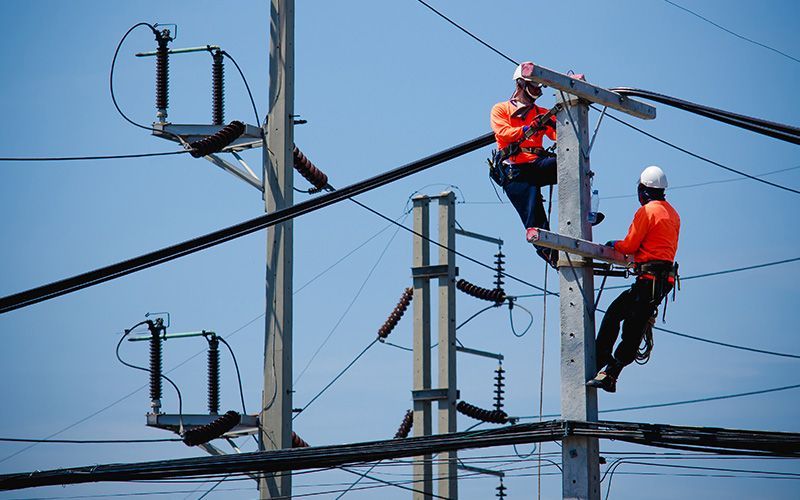
When Linemen Are First Responders: Rescue, AED Readiness, and Simulation That Saves Lives
In high-risk industries like electrical utility, linemen often serve a dual role: skilled technicians and immediate first responders. Whether scaling utility poles or working in isolated substations, linemen face unpredictable environments where a split-second emergency could turn fatal. When accidents happen, it's often their crew that responds first—not professional medics.
That’s why utility companies are increasingly prioritizing realistic emergency training, including CPR, pole-top rescue, bleeding control, and AED use. Today’s workforce needs more than certification cards—they need hands-on, scenario-driven practice that builds competence under pressure.
Lineman Emergencies Are Unique, and High Stakes
From electrical shock and cardiac arrest to trauma and falls, linemen face some of the highest on-the-job medical risks. According to the U.S. Bureau of Labor Statistics, utility line work remains among the most dangerous occupations, with fatalities caused by electrocution, falls, and struck-by injuries. (BLS, 2023)
In these environments:
- Cardiac arrest from electrical shock requires immediate defibrillation
- High-angle falls can result in major trauma and airway compromise
- Remote job sites mean EMS response may be delayed by 10+ minutes
In those first minutes, survival often depends on the crew and whether they’re trained, equipped, and confident enough to act.
AED Use: Critical in Utility Environments
Automated External Defibrillators (AEDs) save lives—but only if people are trained to use them effectively.
Why AED access and training matters:
- Sudden cardiac arrest (SCA) can happen on the job, especially from electric shock
- For every minute without defibrillation, survival drops by 7–10% (AHA, 2024)
- OSHA recommends AEDs for worksites with high-voltage exposure or where EMS response is delayed
Training with AED Trainers allows linemen to:
- Practice electrode pad placement on realistic manikins
- Simulate shock analysis and delivery in high-stress conditions
- Learn to troubleshoot real-world obstacles (e.g., wet conditions, PPE interference)
Some advanced trainers also simulate incorrect pad placement, expired battery alerts, or comms issues—preparing crews for the unexpected.
And when it comes to real AED deployment, linemen must know:
- Where the AED is located on every vehicle or job site
- How to maintain AEDs and check readiness status
- The difference between adult and pediatric pads (especially in public utilities)
- Legal protections and Good Samaritan laws that apply to trained rescuers
Pole-Top Rescue Isn’t Enough Without Medical Response
Most lineman teams are trained annually on pole-top rescue: how to safely lower an injured coworker from height. But the rescue is only step one. If the victim is unconscious or in cardiac arrest, CPR and AED use must immediately follow.
That’s why integrated simulation, where the drill continues on the ground with BLS and AED deployment, is essential.
A high-quality lineman training scenario might include:
- Pole-top “rescue” with weighted mannequin or dummy
- AED trainer deployment with audio prompts
- Chest compressions and airway support using CPR manikins
- Team communication under time pressure
Training That Goes Beyond Checkboxes
Simulation-based training prepares linemen to act under stress—not just remember procedures.
Best practices include:
- Using portable AED trainers and CPR manikins at substations, garages, and pole yards
- Running “cold start” drills where crews respond with no advance warning
- Practicing scene safety and electrical lockout/tagout protocols
- Reviewing After Action Reports (AARs) for every training session
Companies like Duke Energy, Entergy, and regional co-ops have implemented quarterly high-fidelity simulations with measurable results: faster time to intervention, reduced hesitation, and greater confidence in live rescues.
Forward-Looking: More Than Compliance, It’s Readiness
With OSHA expanding its focus on responder preparedness and industries recognizing the value of frontline action, AED access and training is no longer optional, it’s a critical component of workplace safety strategy.
Future-focused utility companies are:
- Investing in site-specific AED deployment strategies
- Creating digital training logs for AED, CPR, and pole-top rescue
- Integrating AED readiness checks into daily safety walkarounds
- Tying emergency response training to worker retention and safety KPIs
Conclusion: Train for the First 3 Minutes—Because They Matter Most
When a lineman goes down, those first minutes count. And it’s not just about reaching them, it’s about knowing what to do next. Through simulation-based training, AED use drills, and crew-wide readiness programs, utility teams can go from reaction to rescue-ready—prepared to take lifesaving action before help arrives.
Sources
- OSHA Electric Power Generation, Transmission, and Distribution eTool – Medical Services & First Aid
https://www.osha.gov - American Heart Association. “Sudden Cardiac Arrest Statistics,” 2024.
https://cpr.heart.org - Bureau of Labor Statistics. “Fatal Occupational Injuries by Industry,” 2023.
https://www.bls.gov/iif/oshwc/cfoi/cfch0011.pdf - Hard Hat Training. “What is a Pole-Top Rescue?”
https://hardhattraining.com
Disclaimer: This article was developed with the support of generative AI tools and reviewed by our team to ensure accuracy and relevance. It is intended for educational and informational purposes only and should not be considered medical advice, clinical guidance, or a substitute for professional training. Always consult relevant institutional policies, accrediting bodies, or medical professionals for clinical decisions.


