
From Classroom to Career: How Hands-On Simulation Boosts Allied Health Graduate Job Readiness
Why Job Readiness Matters More Than Ever
The allied health sector, encompassing professions like medical assisting, radiology, respiratory therapy, and phlebotomy, is projected to grow 13% by 2032, adding hundreds of thousands of jobs across the U.S. (U.S. Bureau of Labor Statistics, 2024). Yet, employers consistently report a skills gap among new graduates. According to the 2024 Health Workforce Readiness Report, 62% of allied health employers say graduates have strong theoretical knowledge but lack the practical skills and confidence needed to perform on day one. This disconnect costs employers time and resources in onboarding, and for graduates, it can delay full integration into the workforce.
The Hands-On Advantage
High-quality, simulation-based training closes that gap by mirroring real-world clinical environments. Through repeated, scenario-driven practice, students build not just technical skills but also critical thinking, adaptability, and professional communication.
STAT HIGHLIGHT: Programs integrating simulation into more than 30% of their training hours saw a 22% increase in graduate job placement rates compared to programs with minimal or no simulation (American Association of Community Colleges, 2024).
Best Practices for Increasing Graduate Job Readiness
- Integrate Multi-Skill Simulation Across the Curriculum
Instead of isolating skills in single labs, combine scenarios that require multiple competencies — for example, pairing vital sign measurement with patient intake interviews and EHR documentation. - Mimic the Real Workflow
Simulation should replicate the exact order and pace of real clinical tasks, from patient arrival to discharge instructions. - Use Employer-Driven Competency Checklists
Partner with local healthcare employers to align simulation scenarios with actual job requirements. - Incorporate Soft Skills Training
Role-play professional communication, conflict resolution, and patient education alongside technical skills. - Assess and Debrief
Structured debriefing after each scenario improves retention and allows students to self-identify improvement areas.
Case Study: Raising Employability Through Simulation
In 2024, Riverbend Technical College partnered with three regional hospitals to redesign its allied health curriculum with simulation as a core training method.
Implementation:
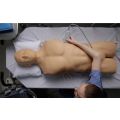
- Added 120 hours of simulation-based labs using multi-skill allied health manikins and task trainers
- Created integrated scenarios requiring students to perform a range of tasks: blood draws, vital signs, EKG setup, and patient communication
- Conducted quarterly employer review panels to align competencies with local hiring needs
Outcomes After One Year:
- Graduate job placement rate: Increased from 78% to 93%
- Employer satisfaction scores: Rose 19% in the first six months
- Student self-reported confidence: Jumped 26% in key skills like phlebotomy and patient interaction
Employer Feedback:
"We now onboard Riverbend graduates in half the time compared to previous cohorts — their clinical readiness is outstanding." — Director of Clinical Services, Mercy Regional Hospital
Why Simulation Equals Employability
Employers increasingly expect new hires to contribute immediately without months of remediation. Simulation allows allied health students to bridge the gap between learning and doing, making them more competitive and confident.
With the right simulation tools, allied health programs can:
- Shorten employer onboarding times
- Increase graduate placement rates
- Enhance the reputation of their programs in the local healthcare community
Final Takeaway
Increasing graduate job readiness isn’t optional, it’s the competitive edge allied health programs need in a rapidly growing, competitive job market. Simulation-based education not only benefits students but also strengthens relationships with employers and elevates program outcomes.
Visit our Allied Health Learning Hub
Sources:
- U.S. Bureau of Labor Statistics. Employment Projections: Healthcare Support Occupations, 2024.
- Health Workforce Readiness Report. Closing the Skills Gap in Allied Health Education, National Center for Health Workforce Studies, 2024.
- American Association of Community Colleges (AACC). Simulation’s Impact on Career Readiness in Health Sciences Programs, 2024.
Disclaimer: Portions of this content were created using AI technology and reviewed to ensure accuracy, clarity, and alignment with current industry standards.