

February 27, 2026
17 view(s)
WorldPoint's Blog

Featured posts
Search the blog

February 17, 2026
27 view(s)
The First 10 Minutes of a Mass Casualty Incident: What Actually Determines Survival?
For law enforcement leaders, training commanders, emergency managers, and first responders, this reality has direct operational implications. The agencies that perform well during a mass casualty incident are rarely the ones with the longest written plans. They are the ones who have engineered performance into the first critical minutes.
This article examines what modern research, national data, and recent guideline updates reveal about early survival determinants in mass casualty response — and why multi-agency planning must shift from policy compliance to measurable execution.

February 6, 2026
30 view(s)
When Linemen Are First Responders: Rescue, AED Readiness, and Simulation That Saves Lives
From electrical shock and cardiac arrest to trauma and falls, linemen face some of the highest on-the-job medical risks. According to the U.S. Bureau of Labor Statistics, utility line work remains among the most dangerous occupations, with fatalities caused by electrocution, falls, and struck-by injuries. (BLS, 2023)

January 22, 2026
18 view(s)
Tactical Training in Transition: A Strategic Guide to Evolving Combat Medic Readiness
Modern military and government medical teams operate in environments that are fundamentally different from those of even a decade ago. Peer and near peer conflict, contested evacuation corridors, urban density, cyber disruption, and prolonged casualty timelines are no longer theoretical, they are expected.
Yet a critical question remains: Are current training models truly preparing medics for the environments they will face in 2026 and beyond? Combat medical readiness is no longer defined solely by technical proficiency. It now depends on a medic’s ability to adapt under pressure, manage uncertainty, coordinate with joint forces, and sustain care over time, often without immediate evacuation or resupply.
January 9, 2026
36 view(s)
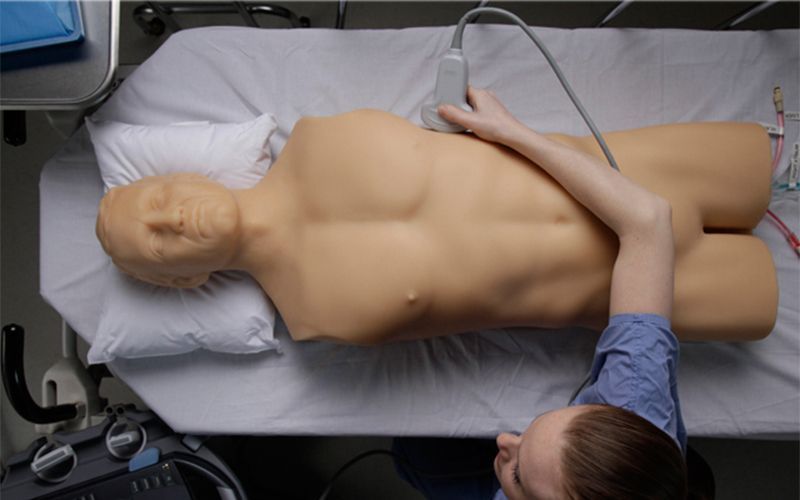
Ultrasound Simulation That Performs: A Deep Dive into Strategic Realism for Imaging Education
Ultrasound is among the most widely used imaging modalities in modern healthcare because it offers real-time visualization without ionizing radiation. Yet, its diagnostic impact is uniquely tied to the operator’s capability. Programs that once measured success by exposure hours or observed scans are now shifting toward competencybased achievement, meaning learners must demonstrate reliable performance under conditions that mirror clinical reality.
January 9, 2026
37 view(s)
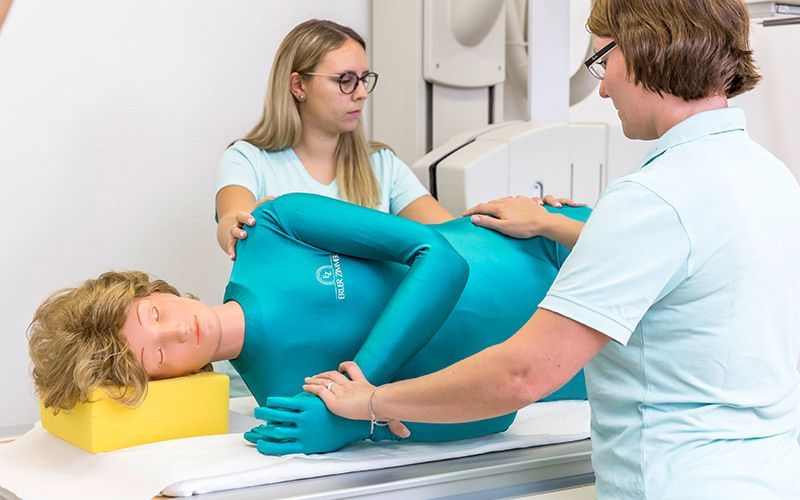
Simulation in Radiologic Tech Programs: Preparing Students for Modern Clinical Imaging
Healthcare is rapidly evolving. Imaging workloads are growing. Employers expect graduates who can contribute from the first shift. Accrediting bodies are emphasizing competency over seat time. So the real question isn’t whether simulation matters, it’s: Are your simulation practices preparing students for the complexity of modern imaging or just helping them check boxes?
January 7, 2026
53 view(s)
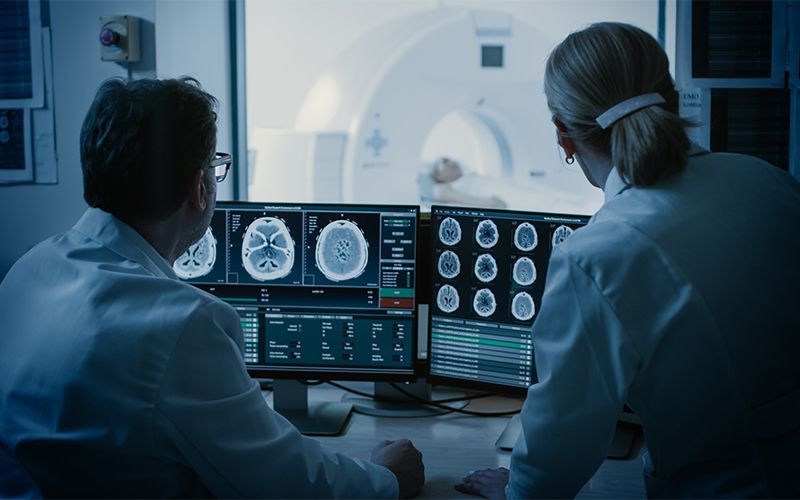
From Simulation to Mastery: Why Imaging Education Can’t Ignore Hands On Training in 2026
Imaging education, in both ultrasound and radiologic technology, sits at a pivotal moment. Traditional apprenticeship models that rely on sporadic clinical exposure are no longer sufficient in an era where diagnostic precision, procedural confidence, and patient safety are non negotiable. As educators, clinical leaders, and administrators, we must ask: How can we better prepare learners for the complexity of real imaging work before they touch a patient? The answer lies in simulation based education (SBE) — not as a nice to have, but as a strategic cornerstone of modern imaging curricula.
November 23, 2025
83 view(s)
WorldPoint Expands Its Commitment to Latin America: A Strategic Alliance with Synbioo and Dr. Luis Silva to Elevate Healthcare Training
For more than 30 years, WorldPoint has been a trusted ally to healthcare educators around the world, supporting instructors, universities, hospitals, and simulation centers with high-quality, evidence-based training tools and resources. Now, that trusted presence is growing even stronger. With an expanded partnership that brings together Synbioo’s in-country operational power and Dr. Luis Silva’s clinical and educational expertise, WorldPoint is deepening its commitment to instructors and institutions across Latin America.
November 19, 2025
88 view(s)
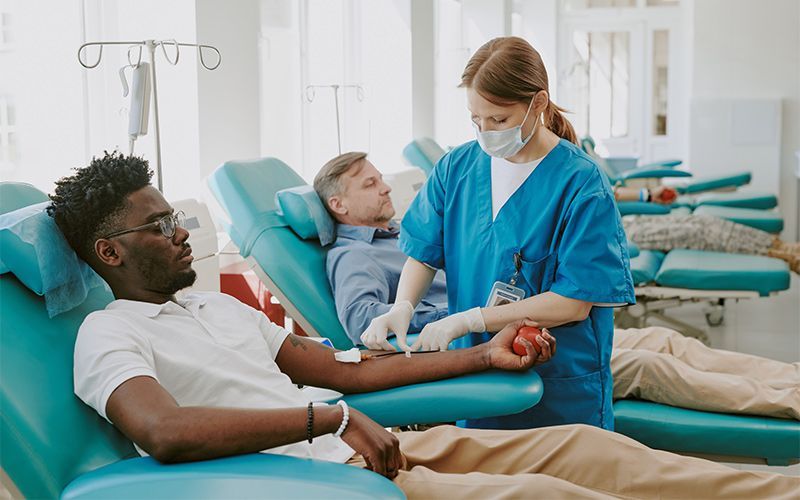
The Future of Phlebotomy Training: Preparing for a More Complex, Patient-Centered Landscape in 2026 and Beyond
Phlebotomy is no longer a behind-the-scenes technical role, it’s a frontline healthcare profession that intersects with patient experience, diagnostic accuracy, and risk mitigation. As we look toward 2026, the scope of phlebotomy is expanding, and so are the demands on educators, trainers, and healthcare systems responsible for developing competent, confident blood collection professionals.
November 18, 2025
247 view(s)
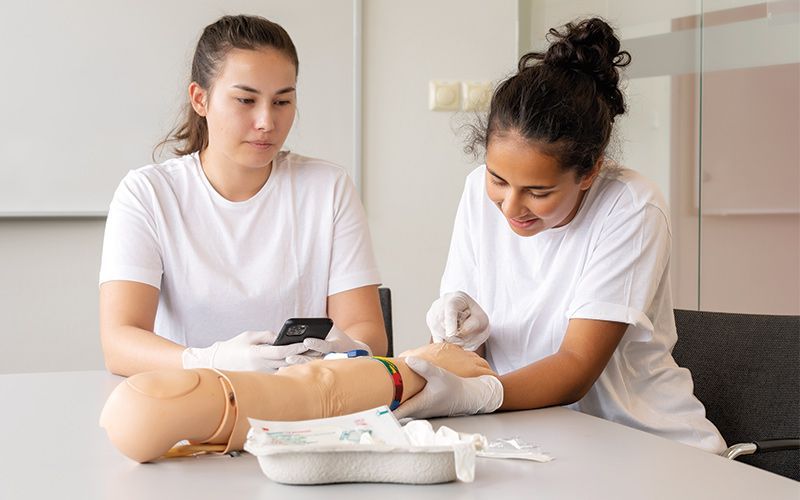
Phlebotomy Technique Training: How to Improve First-Attempt Blood Draw Success
For patients, few clinical procedures are as routine, or as anxiety-inducing, as a blood draw. For healthcare organizations, first-attempt success isn’t just a metric; it’s a patient experience benchmark, a cost control measure, and a key quality indicator.